
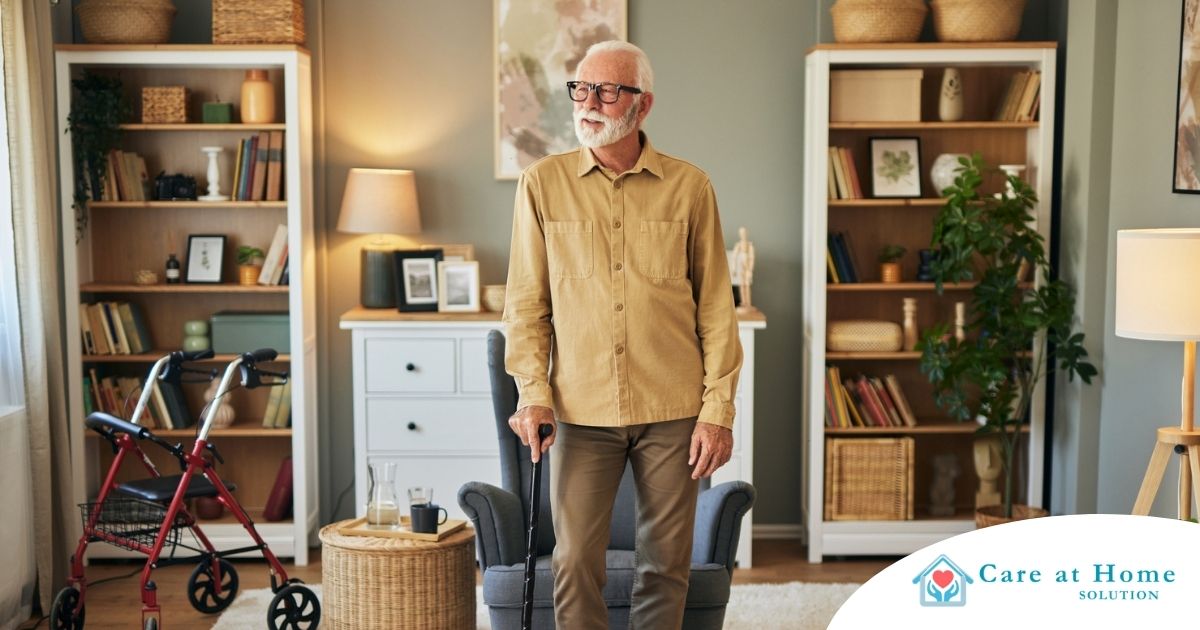
Most people picture fall risk as something that lives outside the house — icy sidewalks, uneven curbs, a rushed parking lot. In reality, most falls happen much closer to home, in rooms that feel completely familiar. Fall prevention for seniors often starts there: walking through the house with slightly different eyes, room by room, and catching the small things that are easy to live with until they’re not. Here’s a closer look at fall prevention strategies for each room, plus a few things families in Lawrenceville may miss the first time through.
Why Falls at Home Deserve a Closer Look
Falls are the most common cause of injury among adults 65 and older, and risk factors like age, balance, and multiple medications all raise the odds — more than one in four older adults falls each year, according to the Centers for Disease Control and Prevention. Not every fall leads to a serious injury, but many do: about 37% of reported falls result in an injury serious enough to need medical care, and falls remain a leading cause of hip fractures and traumatic brain injuries that send older adults to emergency departments each year.
None of that is meant to stir up fear. It’s meant to explain why a room-by-room look at home safety for elderly family members tends to be worth the hour it takes, rather than a set of concerns to get to eventually.
A Room-by-Room Guide to Common Home Hazards
Bathroom
The bathroom tends to carry the most risk in the house — wet surfaces, hard edges, and a lot of getting up and down. A few changes go a long way toward making the home safer:
- Grab bars near the toilet and inside the tub or shower, professionally installed rather than suction-mounted
- A non-slip mat inside the shower or tub, and a bath mat that stays flat on the floor outside it
- A raised toilet seat if standing up is becoming harder
- A plan to place night lights so a middle-of-the-night trip doesn’t happen in poor lighting
Grab bars alone don’t always solve the problem. It’s common for someone to have bars installed and still hold onto the towel bar or sink edge out of habit, since old movement patterns don’t disappear just because new hardware went in. A caregiver or family member walking through the routine once, in person, often catches that kind of habit faster than a checklist does.
Bedroom
- A clear, well-lit path from the bed to the bathroom, avoiding tripping over anything left on the floor
- A lamp or light switch within reach of the bed, not across the room
- A bed height that allows feet to reach the floor comfortably when sitting on the edge
- Slippers or shoes with backs, non-skid soles, and no slick soles kept right by the bed, instead of walking barefoot or in socks
Kitchen
- Everyday items stored at waist height, so climbing or reaching isn’t necessary
- A sturdy step stool with a handrail, if a step stool is used at all — never a chair
- Spills wiped up right away, and floor mats that lie flat rather than curling at the edges — a high-traffic area is exactly where a small hazard causes the most trouble
Stairs and Hallways
- Handrails on both sides of any staircase, not just one
- Light switches at the top and bottom of stairs, so no one climbs through dimly lit areas
- Runners or carpet secured tightly, with no loose edges to catch a foot
- Electrical cords run along walls, well outside the walking path
This is often where the gap between “the house looks fine” and “the house is actually safe” shows up. A worn stair edge or a rail that’s started to wobble is easy to walk past every day without noticing — and it’s exactly the kind of thing a second set of eyes, checking in regularly, tends to catch before it becomes a problem.
Living Room
- Furniture arranged with a clear, wide path through the room
- Cords and cables run along walls, not across high-traffic areas
- Low tables and pet items kept out of main walking routes
- Rugs either removed or secured flat with non-slip backing
What Else Reduces Fall Risk Beyond the Room?
A safer house is a strong start, but a fall prevention plan usually involves a few things beyond the walls too:
- A medication review with a healthcare provider. Some medications — including certain blood pressure prescriptions — cause dizziness or drowsiness as a side effect, and a doctor or pharmacist can flag combinations or other symptoms worth a second look.
- Regular vision and hearing checks. Even small, gradual changes in eyesight or hearing loss are linked to a higher risk of falling.
- Footwear. Slippers, socks, and high heels are common culprits — a supportive, low-heeled shoe with a non-skid sole makes more of a difference than it seems like it should.
- Balance and strength exercises. Something as simple as daily walking, strength training, or a gentle class geared toward leg strength and balance can help build strength and meaningfully improve balance over time. Local senior centers often run these classes at low or no cost.
- A physical therapist or occupational therapist. For someone who’s already fallen, or who has a specific health concern affecting mobility, a physical therapist can build a targeted plan, and an occupational therapist can assess the home itself for hazards a family might miss. A local disability resource center can often help connect families to both.
How Home Care Helps Prevent Falls
Fall prevention success comes down to consistency — noticing the small things before they add up. That’s harder to do from a distance, and it’s easy to miss even when a family is close and attentive, simply because everyone’s used to seeing the same space every day.
A caregiver who’s in the home regularly brings a different kind of attention. For example, they notice when a rug has started to curl, when someone’s grip on the counter has gotten a little tighter than it used to be, or when a once-steady walk to the mailbox has slowed down. They can also help directly with the physical parts of the day that carry the most risk — getting in and out of the shower, moving safely from bed to chair, walking to the kitchen at night — turning a fall prevention plan into something that’s actually followed, not just written down.
For families across Lawrenceville and Duluth, Suwanee, Buford, Snellville, and surrounding cities in Gwinnett County, that kind of steady, familiar presence tends to matter as much as any single home modification. A safer house helps. A safer house paired with someone who notices the small changes over time helps more.
Making Your Home Safer, One Room at a Time
A full room-by-room walkthrough doesn’t have to happen all at once. Starting with the bathroom and stairs — the two spots that tend to carry the most risk — is a reasonable place to begin, with the rest of the house following as time allows.
If you’re not sure where to start, or you’d simply like a second set of eyes on the house, Care At Home Solution provides in-home care throughout Lawrenceville and Duluth, Suwanee, Buford, Snellville, and surrounding cities in Gwinnett County, including 24/7 In-Home Care, Alzheimer’s & Dementia Care, Companion Care, Personal Care, Hospice Support, Injury and Fall Prevention, and Light Housekeeping, with fall prevention built into the everyday routine. Reach out to learn more about how in-home care can support your family.
Receive Our Newsletter
Stay informed and up-to-date with the latest tips, news, and resources on senior care by subscribing to our newsletter. At Care at Home Solution, we provide valuable insights on how to improve the well-being and quality of life for your loved ones.
Our newsletter features expert advice, caregiving tips, company updates, and much more to help you navigate the challenges of senior care. Sign up today to receive helpful content directly to your inbox, and join our community of families committed to ensuring their loved ones live with comfort, dignity, and independence.